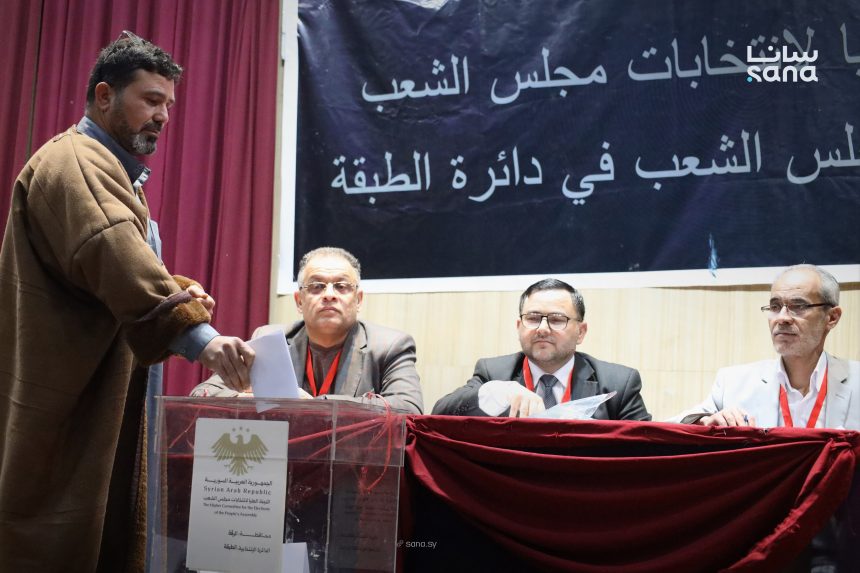
On March 17, the Higher Committee for People’s Assembly Elections announced the completion of elections for members of the People’s Council (Syrian Parliament) representing Raqqa and the city of Tabqa in the same governorate. Previously, the committee had decided to postpone elections in Raqqa, Suwayda, and Hasakah due to the political situation in these regions and the limited authority of Damascus.
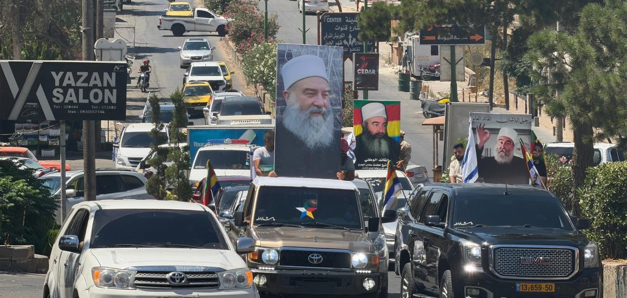
Both Hasakah and Raqqa had been under the control of the Syrian Democratic Forces (SDF), while Suwayda has been de facto controlled by an Israeli-backed Druze militia loyal to Hikmat al-Hijri. Following the Syrian Arab Army’s offensive against the SDF, which resulted in the group’s territorial defeat, elections in Raqqa governorate were rescheduled. The process began with elections in Türkiye-controlled Ras al-Ain and Tel Abyad, and continued with Raqqa and Tabqa.
The committee’s spokesperson, Nawar Najmeh, announced the winning candidates via social media:
Raqqa:
- Ahmed Mahmoud Al-Khalf Shallash
- Muqdam Ali Al-Jash’am
- Ahmed Mahmoud Hasan Al-Omar
Tabqa:
- Abdullah Majid Al-Haj Abd
Despite these developments, a total of 84 out of 210 seats remain unfilled, delaying the legislature’s ability to function or even formally convene. Elections are still pending in Hasakah, Suwayda, and Ain al-Arab (Kobani).
The formation of the legislature depends not only on developments within these regions but also on President Ahmed al-Sharaa’s decisions. In addition to the 140 seats allocated to the governorates, the president will directly appoint 70 representatives to the People’s Council. Explaining this provision, al-Sharaa stated: “The country is polarized (…) we left a 30% margin for maneuver in case the results are unsatisfactory. This allows us to conduct a thorough study of the results and identify shortcomings, which we can then address.”
Meanwhile, the Syrian Ministry of Culture recently announced the selection of seven candidate texts for a new national anthem. In addition to criticism of the proposed texts, controversy has also arisen over the perceived sidelining of the legislative process.
Another crucial issue regarding the future of Syria’s legislature is the representation of women and minorities. While current representation remains limited, there are some examples—such as Afrin, where all three representatives are Kurdish and one is a woman. However, broader inclusion is expected to evolve as the country continues its reconstruction process.
- MEKD Syria Brief